Concrete Slabs Built to Elevation and Load
Slab pouring in Anderson for commercial lots and larger residential builds where base prep and finished grade determine long-term performance
Many of the larger residential builds and commercial lots in Anderson sit on graded fill that was brought in to establish elevation, and the slab that goes on top of that fill has to be formed and poured to match the specified height without settling or cracking at the joints. Holtzclaw Concrete & Infrastructure handles slab pouring with an owner-operated crew that works through the grading, forming, reinforcement placement, and finishing in sequence, so each step is checked before the concrete goes down. You'll see this work in Anderson Mill and along Pendleton Road, where new construction and additions require a slab poured to a set grade after the lot has been cut or filled.
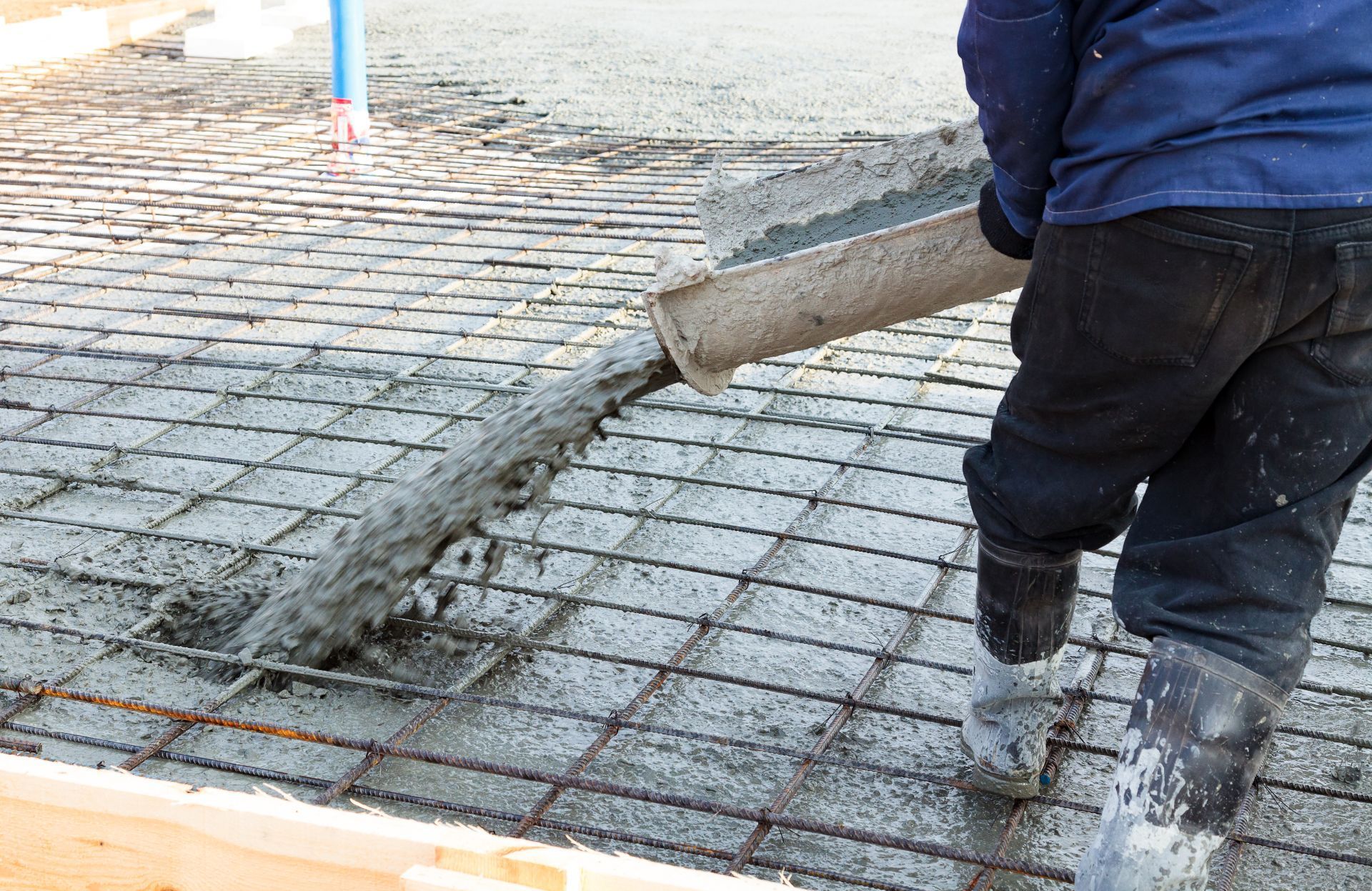
The work begins with subgrade excavation and compaction, where the crew grades the base to the finished elevation and compacts the material so the slab won't shift once it's poured. Forms are set to hold the concrete at the correct height, and reinforcement is placed according to the thickness and load requirements. The concrete is poured in a planned sequence, screeded to level, and finished with float and trowel work that produces the specified surface. Large pours take scheduling time because the material has to arrive in the right order and the crew has to keep pace with the placement, so lead time matters when the job is tied to a construction calendar.
Schedule a site visit to review subgrade conditions and confirm the pour sequence for your project.
A slab poured over compacted fill depends on the base being graded to the right elevation and compacted enough that the weight of the concrete and the load it carries won't settle the material underneath. The crew checks the subgrade before the forms go in, and any soft spots or low areas are corrected before reinforcement is placed. The concrete is poured in sections that allow the finishing crew to work the surface while it's still workable, and joints are placed where the slab will move as the ground shifts with moisture and temperature changes.
Once the slab is finished and cured, the surface is level to the specified tolerance, the joints are clean, and the thickness matches what was called for in the plan. The slab won't rock or crack at the edges if the forms were set correctly, and the finished grade around the perimeter drains water away from the concrete rather than pooling against it. Holtzclaw Concrete & Infrastructure works with commercial clients and residential builders who need the slab poured on schedule and ready for the next phase of construction.
The scope includes grading, forming, reinforcement, pouring, and finishing, but it does not include permitting or engineering drawings unless those are added to the contract. Confirm what the quote covers before the crew schedules the pour, and ask how the work is staged if the slab is large enough that it has to be done in more than one visit.
Answers About How the Work Is Done
Slab projects in Anderson often involve coordinating the pour with site prep and construction schedules, and property owners ask about the process before they book the work.
What happens to the subgrade before the slab is poured?
The crew excavates to the specified depth, removes any unsuitable material, and compacts the base so the slab has a stable surface to sit on, which is especially important when the lot was graded with fill.
How is reinforcement placed in a large slab?
Rebar or mesh is positioned according to the thickness and load requirements, and it's supported at the correct height so the reinforcement stays in the middle of the slab when the concrete is poured, rather than sinking to the bottom.
Why does a large pour require scheduling in advance?
The concrete has to arrive in a sequence that matches how fast the crew can place and finish it, and the supplier needs lead time to schedule the trucks, so the pour date is set after the forms and base are ready and the crew is available to work through the entire job.
What does the finished surface look like once the slab is cured?
The slab is level to the tolerance specified in the plan, the joints are tooled and clean, and the surface has the texture that was called for, whether that's a smooth trowel finish or a broom finish for traction.
How is the slab different from a pad or a driveway?
A slab is typically thicker and reinforced to carry a building load or heavy equipment, and it's poured to a precise elevation so the structure that sits on it is level, whereas a pad or driveway may not need the same thickness or reinforcement depending on how it's used.
Holtzclaw Concrete & Infrastructure also pours slabs in Greenville, Seneca, Clemson, Easley, and Greenwood. Contact Holtzclaw Concrete & Infrastructure to confirm lead time and arrange a site visit for your slab project.