Walks Built to Last Through Daily Use
Concrete sidewalks in Anderson for cracked, heaved or narrow walks that need full removal and regrading
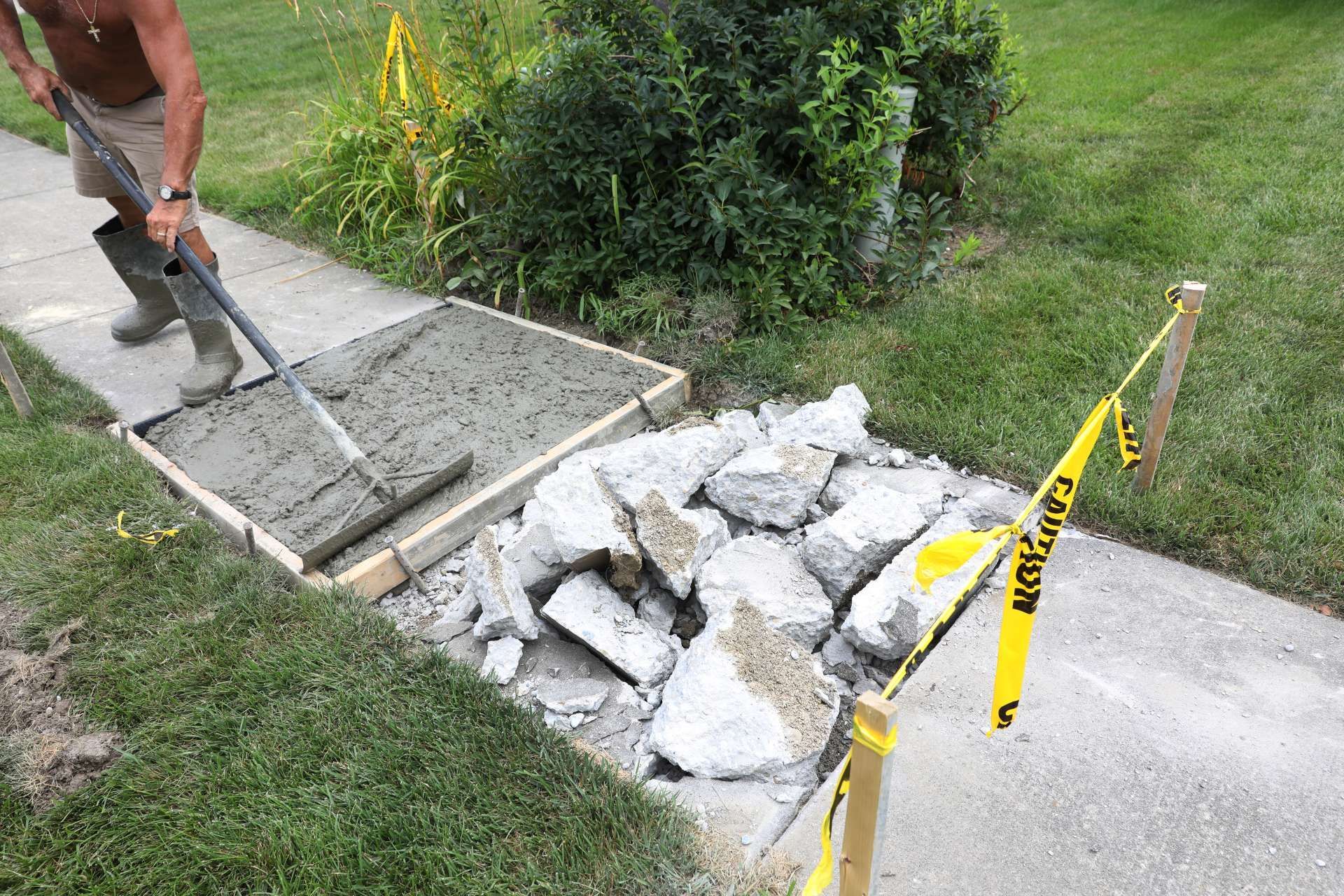
Older Anderson neighborhoods, particularly in areas like Downtown Anderson and Westside, were built when sidewalk construction standards were different—slabs were thinner, narrower, and often poured directly over clay or poorly compacted fill. When those walks heave, crack through multiple sections, or settle enough to create tripping hazards, patching becomes a temporary fix that only delays the inevitable replacement. Holtzclaw Concrete & Infrastructure handles the full removal and rebuild, excavating to proper sub-base depth and regrading the line so the finished walk drains correctly and sits level with curbs, driveways, and front steps. The result is a walk that handles foot traffic, lawn equipment, and freeze-thaw cycles without shifting or breaking apart within a few seasons.
The crew stakes the line and grade first, ensuring the walk runs true and slopes away from the house or building. Excavation removes the old concrete and reaches the sub-base depth needed for stability, and that base is compacted before forms go in. Reinforcement is placed where the slab needs it—typically at points where the walk crosses utility trenches, slopes, or transitions between soil types. Concrete is placed, screeded to elevation, floated smooth, and finished with a broom texture that provides traction in wet conditions. Control joints are cut at intervals to manage cracking in predictable lines rather than random fractures across the surface.
Schedule a property evaluation to identify specific grading and sub-base concerns for your walk.
The base determines whether the walk stays level or begins settling and heaving within the first year. Holtzclaw excavates to the depth needed for your soil type, compacts the sub-base in lifts, and brings the grade to the elevation that matches existing curbs and transitions. Forms are set to the width and pitch specified, and joints are placed every four to five feet to control where cracks form as the slab cures and experiences seasonal movement.
Once the pour is complete and the surface has cured, you'll notice that the walk sits flush with driveway aprons, steps, and curb cuts, with no lips or drop-offs that catch feet or wheelchair casters. Water sheets off the surface rather than pooling in low spots, and the broom finish provides grip without collecting debris in deep grooves. The joints remain clean and straight, doing the job they were cut for—allowing the slab to expand and contract without random cracking across the middle of panels.
Confirm with the crew whether removal of the old walk, hauling, and disposal are included in your quote, or whether those steps are priced separately. Some jobs also require coordination with utility locates if the walk crosses service lines, and grading may need adjustment if the lot has settled or drainage patterns have changed since the original walk was poured.
Common Questions About This Service
Sidewalk projects in Anderson often involve working around mature trees, older utility lines, and grading that has shifted over decades, so homeowners typically ask about the preparation work and what the finished surface will look like once it's cured.
What happens to tree roots that run under the existing walk?
The crew excavates carefully around roots and may need to adjust the walk alignment or depth to avoid cutting through major structural roots. In some cases, a root barrier or deeper base layer is placed to prevent future heaving, though the choice depends on the tree species and how close the trunk sits to the walk line.
How is the width and slope of the new walk determined?
The width typically matches the original walk unless local code or accessibility standards require a wider path. Slope is set to drain water away from the building and toward the street or lawn, usually at a pitch of one-quarter inch per foot, and the crew confirms the grade with a level during the form setup.
What does the broom finish do that a smooth finish doesn't?
The broom texture creates traction across the surface, preventing slipping when the walk is wet from rain or irrigation. The bristle pattern is shallow enough to clean easily but deep enough to provide grip, and it's applied in one direction so water doesn't channel along the grooves.
How long before you can walk on the new sidewalk?
The surface is firm enough for foot traffic within 24 to 48 hours under normal conditions, though full strength develops over several weeks. Avoid wheeling heavy equipment or vehicles across the slab during the first week, and keep the surface damp during hot weather to prevent surface cracking as it cures.
Why are control joints cut into the concrete after it's poured?
Joints create a planned weak point where the slab will crack as it shrinks and moves with temperature changes. Without joints, cracks form randomly across the surface. The joints are cut to about one-quarter of the slab thickness and spaced to match the width of the walk, keeping cracks contained and the surface looking clean.
Holtzclaw Concrete & Infrastructure also installs concrete sidewalks in Greenville, Seneca, Clemson, Easley and Greenwood. Request a detailed estimate based on your current walk condition and the grading work needed to prepare the site.