Driveways That Handle Years of Vehicle Weight
Concrete driveways in Anderson for narrow strips or settled gravel that need full subgrade rebuilding
Driveways in older Anderson neighborhoods, particularly around Anderson Mill and Honea Path Road, were often poured as narrow single-lane strips or left as gravel when the homes were built—decades of vehicle traffic, settling subgrade, and seasonal moisture movement have left many of those drives cracked, rutted, or too narrow for modern vehicles. The owner of Holtzclaw Concrete & Infrastructure runs the job from grading through the finish with a crew that also handles large slab pours on commercial projects, so the process accounts for proper thickness, a compacted base, and control joints placed to manage cracking where it will occur naturally. The finished driveway supports daily vehicle weight without cracking at the apron, settling along the edges, or developing surface spalling from freeze-thaw exposure.
The existing surface is removed if needed, and the subgrade is excavated to the depth required for a stable base—usually deeper along edges where soil has been disturbed or where the original drive was never properly prepared. Base material is placed in layers and compacted with a plate compactor or roller, bringing the grade to the elevation that matches garage floors, street aprons, and drainage slopes. Forms are set to width and pitch, reinforcement is positioned to handle vehicle loads, and the slab is poured, screeded to level, and finished with a broom texture or light trowel depending on the desired surface. Control joints are cut at intervals to control where cracks form as the concrete cures and responds to temperature changes.
Schedule a property evaluation to identify specific subgrade and drainage concerns for your driveway.
The subgrade preparation determines whether the driveway remains flat under vehicle weight or begins cracking and settling within the first few years. Holtzclaw excavates to firm soil, removes soft clay or organic material, and compacts the base in lifts to prevent voids from forming under the slab. Reinforcement is placed to tie the slab together and prevent individual sections from moving independently, and joints are cut to match the driveway width and provide planned crack lines that remain straight and clean rather than wandering across the surface.
Once the driveway cures, you'll notice that vehicle tires no longer sink into soft spots or gravel, and water sheets off the surface toward the street or yard rather than pooling in depressions along the center or edges. The driveway sits flush with the garage floor and street apron, eliminating the bump or drop-off that scrapes low-clearance vehicles, and the surface remains smooth and level even under the weight of trucks or trailers parked for extended periods.
Confirm whether the estimate includes removal and hauling of the old driveway, grading work to match existing elevations, and any needed adjustments to drainage swales or culvert transitions. Large driveway slabs take scheduling time, so ask about the booking lead time when you request an estimate, especially during peak construction seasons when concrete suppliers and crews are heavily scheduled.
Questions Before Starting Your Project
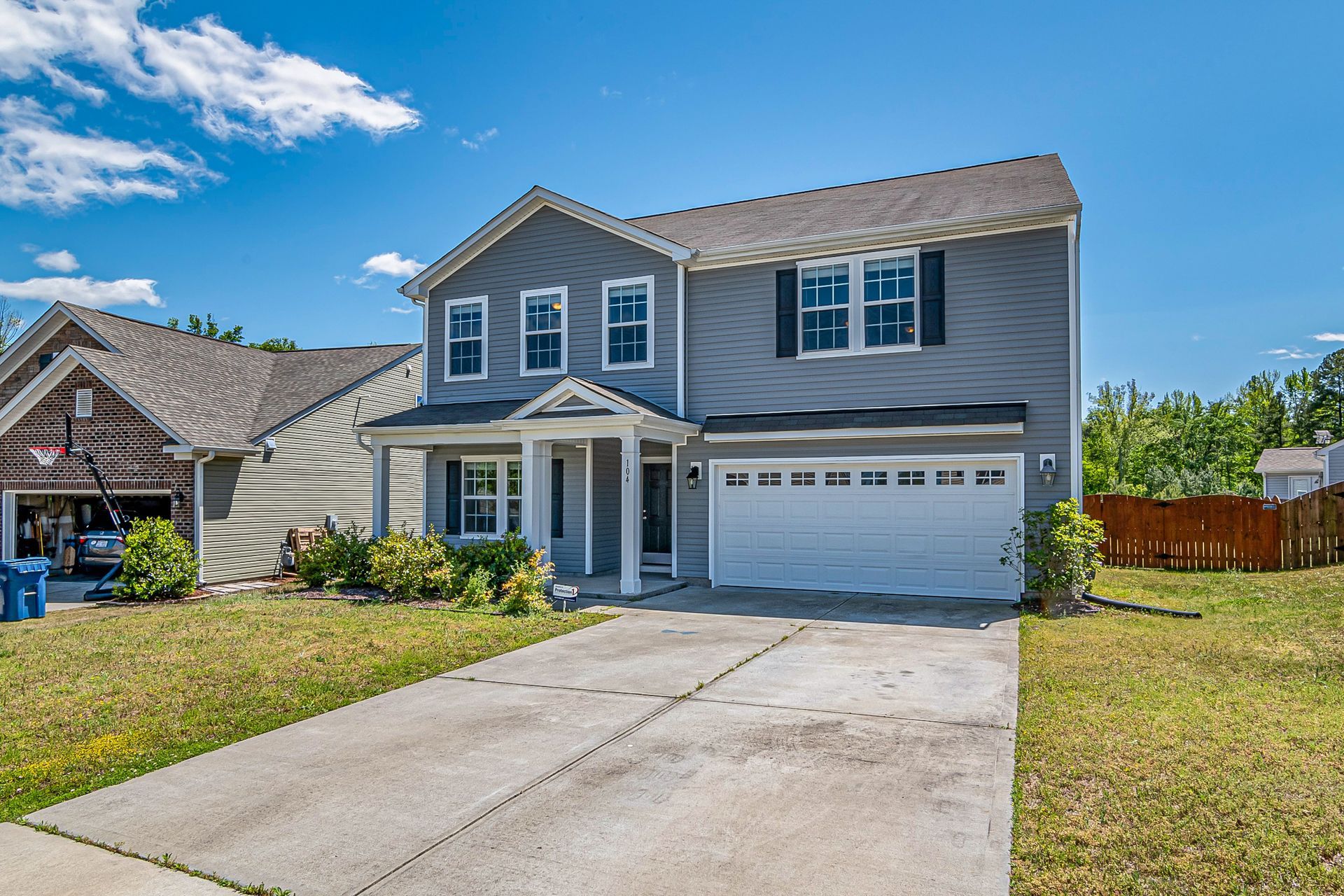
Driveway replacements in Anderson often involve working around mature landscaping, coordinating with street apron transitions, and deciding on thickness and reinforcement based on expected vehicle loads and the condition of the existing subgrade.
How thick does a residential driveway need to be?
Standard residential driveways are poured at four inches for passenger vehicles, with thickness increased to five or six inches along areas that will carry heavier trucks, trailers, or equipment. The crew evaluates the existing subgrade and vehicle use to recommend the appropriate thickness for your situation.
What happens to the grading if the driveway needs to slope for drainage?
The driveway is graded to slope gently toward the street or a drainage swale, typically at a pitch of one-quarter inch per foot or slightly more if the lot requires it. The crew sets the forms to that slope and confirms the grade with a level before the pour, ensuring water runs off without pooling or channeling back toward the garage.
Why are control joints necessary if the slab is reinforced?
Reinforcement holds the slab together and prevents sections from moving independently, but it doesn't stop concrete from shrinking as it cures or expanding and contracting with temperature changes. Joints create planned weak points where those movements result in a clean, straight crack rather than random fractures across the surface.
How long before you can drive on the new driveway?
The surface is hard enough to support foot traffic within 24 to 48 hours and light vehicle traffic within a week, though full strength develops over the course of a month. Avoid parking heavy vehicles or equipment on the slab during the first week, and keep the surface damp during hot weather to slow the cure and prevent surface cracking.
What does the crew do if the subgrade includes soft clay or fill?
Soft material is excavated and removed, then replaced with compacted base material that won't compress under load. The depth of excavation depends on how deep the soft layer extends and how much compaction the base material needs to reach stability. The crew tests the base by walking or driving over it before forms are set.
Holtzclaw Concrete & Infrastructure also installs concrete driveways in Greenville, Seneca, Clemson, Easley and Greenwood. Request a detailed estimate based on your current driveway condition and the grading work needed to prepare the site.